LATEST REVIEWS

Android Reviews

Windows Phone Reviews

Android tablets Reviews

Thursday, May 19, 2016

HTC One M9

What's Hot: Design is still lovely an uniquely HTC, strong performance, HTC Sense 7 is clean and useful.
What's Not: Rear camera isn't great, battery life just OK, phone design is lovely but after 3 generations isn't it time for a change?
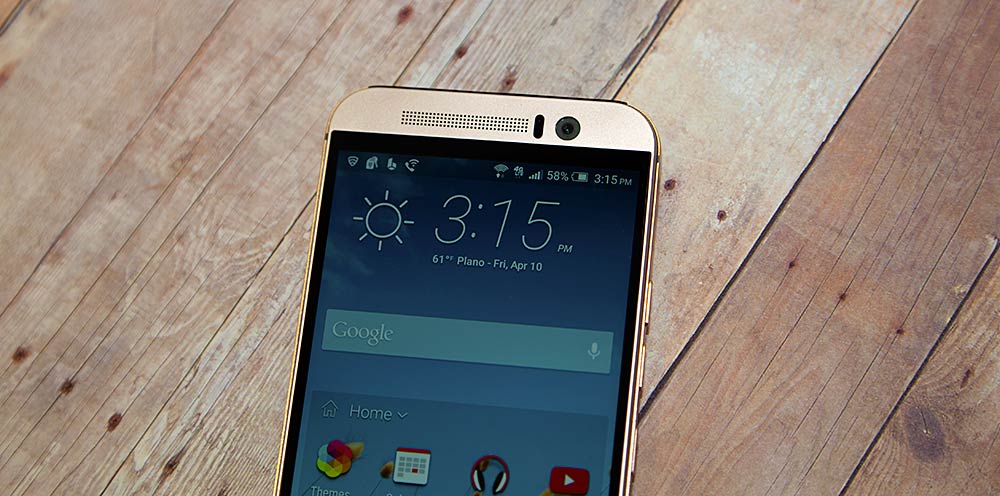
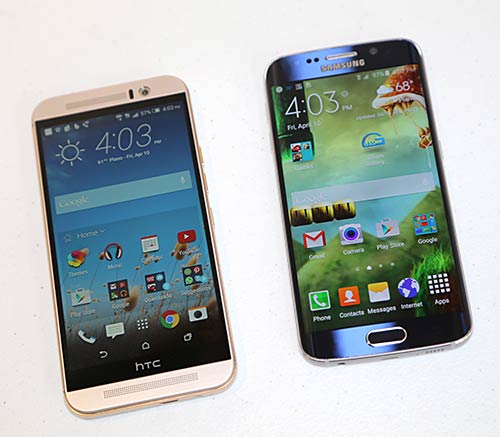
The HTC One M9 is every bit as gorgeous as the One M8. In fact it has a little more polish, literally and figuratively, and I'd say it's the best looking One yet, though some might have trouble telling the M8 and M9 apart at first glance. This is very much a slow evolution of HTC's flagship One series, and that hurts in a year when Samsung has done radical and lovely redesign for the Galaxy S6 and Apple switched to a new design for the iPhone 6 and 6 Plus.
The HTC One M9 runs Android 5 Lollipop with HTC Sense 7 software on the new Qualcomm Snapdragon 810 octa-core CPU clocked at 2 GHZ. It has 3 gigs of RAM, 32 gigs of storage and a microSD card slot (take that, Apple and Samsung!). HTC stuck with the same 5" 1920 x 1080 LCD 3 display as the M8, but the colors are tuned a bit cooler (unlike Samsung and LG, HTC doesn't offer color settings to change color saturation or balance). The M9 has an IR blaster and AV Remote control, WiFi 802.11ac, Bluetooth, NFC, GPS and 4G LTE. HTC went with a standard 20MP rear camera rather than the low-resolution Ultrapixel cameras used on the One M7 and M8, though improvements aren't what we'd hoped in the imaging department. HTC does include a front 3.7MP equivalent Ultrapixel camera on the front for low-light selfie bliss.
Design and Ergonomics
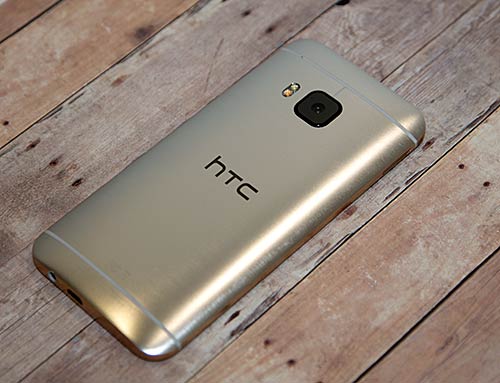
We could almost paste the same section from last year's HTC One M8 review here--suffice to say that the M9 has the same extremely attractive unibody aluminum casing, updated with a ridge around the edge to make it easier to hold onto. I rarely drop phones, but I nearly lost hold of the M8 on several occasions. That hasn't happened once with the M9. The One series has always been relatively tall thanks to the BoomSound speakers, but HTC managed to shave a little from the height, and it's not so different in footprint from the Samsung Galaxy S6, though it is thicker than the S6. The M9 is undeniably one of the more attractive and premium looking smartphones on the market.

Performance and Benchmarks
The HTC One M9 and LG G Flex 2 are the only two Android phones currently on the market running Qualcomm's latest generation Snapdragon 810 processor. This is an octa-core 64 bit processor. Heat was a rumored concern with the 810, but we found the HTC One M9 didn't throttle more than other high-end phones and it got no hotter than the M8. Metal conducts heat, so you will feel the back getting toasty when playing games for 20 minutes or more, but ours never got burning hot. We ran a slew of benchmarks repeatedly over the course of 30 minutes and the numbers didn't drop appreciably. The 2 GHz CPU is solid and performs a bit better than the quad core Snapdragon 805 (graphics show the most improvement).
The phone has 3 gigs of RAM, 32 gigs of internal storage and a microSD card slot that's compatible with cards up to 2TB. It runs Android 5.0 with HTC's tasteful and light customization of Android, called HTC Sense 7.
BenchmarksQuadrant3DMark Ice Storm UnlimitedAnTuTuSunspider JavaScript Test (lower is better)
HTC One M933,73322,16853,582852
Samsung Galaxy S633,35521,16061,873420 (webkit)/1025 (Chrome)
Samsung Galaxy S523,64318,32935,357398
Samsung Galaxy Note 534,63124,46363,086351 (Webkit)/688 (Chrome)
LG G423,73018,65546,043760
LG G Flex 226,39022,64449,344730
LG G324,38518,70836,525425
Nexus 613,59523,52049,961795
Motorola Droid Turbo22,70920,73548,332795
Moto X Pure Edition 201524,77119,70348,700N/A
HTC One M824,52720,89636,087776
Sony Xperia Z32158916,13535,008837
Nexus 5880817,82827,017718
LG G219,7629803 (extreme)32,990823
Samsung Galaxy S412,27611,60124,776826
Geekbench 3: 1294/3716

Camera
HTC continues to use their Ultrapixel camera with larger pixels or sensor sites for the front 4MP camera. That means better low light shots, and it works well since we don't (yet) expect very high resolution from front cameras. The front camera has an f/2.0 lens and it can shoot 1080p video. Quality overall is good, particularly in low light.
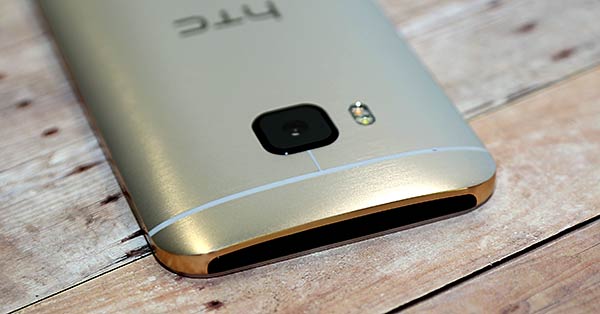
The front 20MP camera sounds impressive on paper--plenty of resolution, a sapphire lens cover, BSI sensor, a decently fast f/2.2 lens and 4K video recording. Toshiba makes the sensor rather than Sony (Sony makes the sensors used in many standalone cameras and in higher end camera phones, and they're at the top of their game right now). Despite a few firmware updates aimed at camera quality, it's still lacking when compared to the top models on the market like the Samsung Galaxy S6LG G4 and even the older Sony Xperia Z3 and the lower megapixel iPhone 6. Dynamic range isn't good and outdoors in sunlight we see lots of very blown-out highlights. Indoor noise is abundant and outdoor shots are sometimes underexposed. It's not a horrid camera, but it's not good enough to match HTC's competition and it's not enough of a quality leap to make HTC One M8 owners upgrade.


Camera
HTC continues to use their Ultrapixel camera with larger pixels or sensor sites for the front 4MP camera. That means better low light shots, and it works well since we don't (yet) expect very high resolution from front cameras. The front camera has an f/2.0 lens and it can shoot 1080p video. Quality overall is good, particularly in low light.

The front 20MP camera sounds impressive on paper--plenty of resolution, a sapphire lens cover, BSI sensor, a decently fast f/2.2 lens and 4K video recording. Toshiba makes the sensor rather than Sony (Sony makes the sensors used in many standalone cameras and in higher end camera phones, and they're at the top of their game right now). Despite a few firmware updates aimed at camera quality, it's still lacking when compared to the top models on the market like the Samsung Galaxy S6, LG G4 and even the older Sony Xperia Z3 and the lower megapixel iPhone 6. Dynamic range isn't good and outdoors in sunlight we see lots of very blown-out highlights. Indoor noise is abundant and outdoor shots are sometimes underexposed. It's not a horrid camera, but it's not good enough to match HTC's competition and it's not enough of a quality leap to make HTC One M8 owners upgrade.
Conclusion
The HTC One M9 is one of the more attractive and premium looking phones on the market, and one of the few to run the new Snapdragon 810 CPU. The 1080p display is perfectly reasonable in terms of practical resolution, though specs mavens will wish for QHD. We think the display is just fine, and as ever the front-facing BoomSound speakers are wonderful. The 20MP camera is a disappointment, even after a few firmware updates. Imaging is a very important feature, and the success of the M9 hinges in good part on the camera. This is especially true given that the 4MP equivalent Ultrapixel rear camera on the M8 was a weak point. Our other concern is that HTC hasn't changed the design language in 4 generations. Even Apple changes their lovely designs every 2 years. The HTC One M9 is pretty, but we fear it will look too much like last year's model to get upgraders excited.
Price: full retail varies by carrier ~$649. $199 with 2 year contract
Website: www.htc.com
HTC One A9

What's Hot: Lovely looking, premium casing. Fingerprint scanner works well. Fairly clean Android 6.0. Much improved rear camera for an HTC.
What's Not: We'd like the phone a lot better were it not for the premium price tag. Looks too much like the iPhone. Battery life is mediocre.


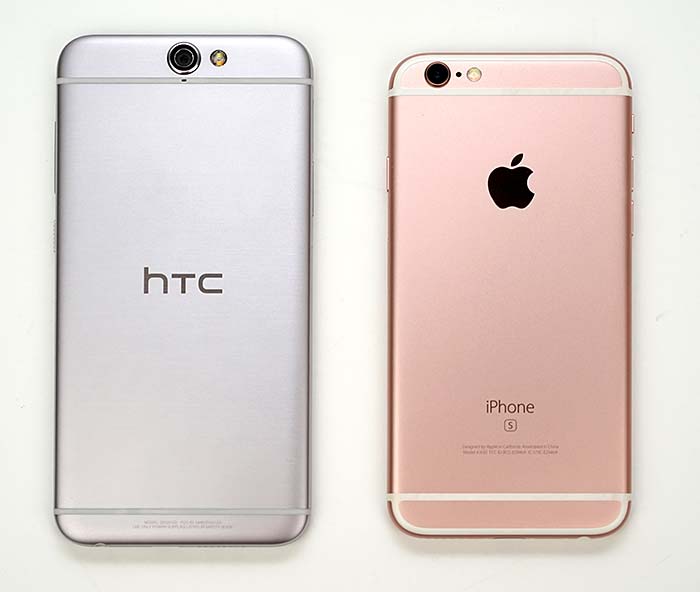
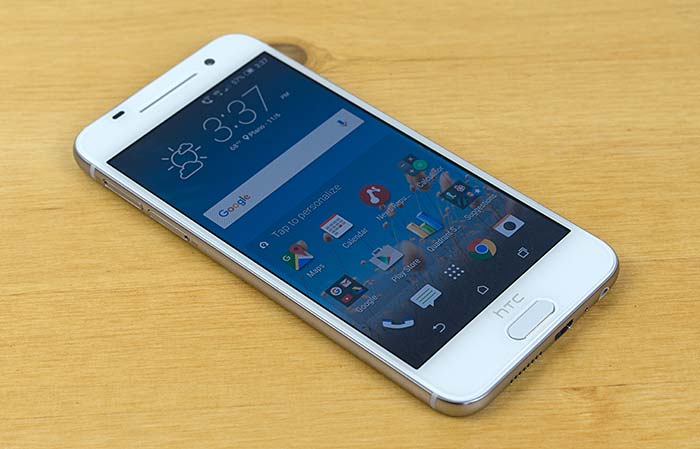
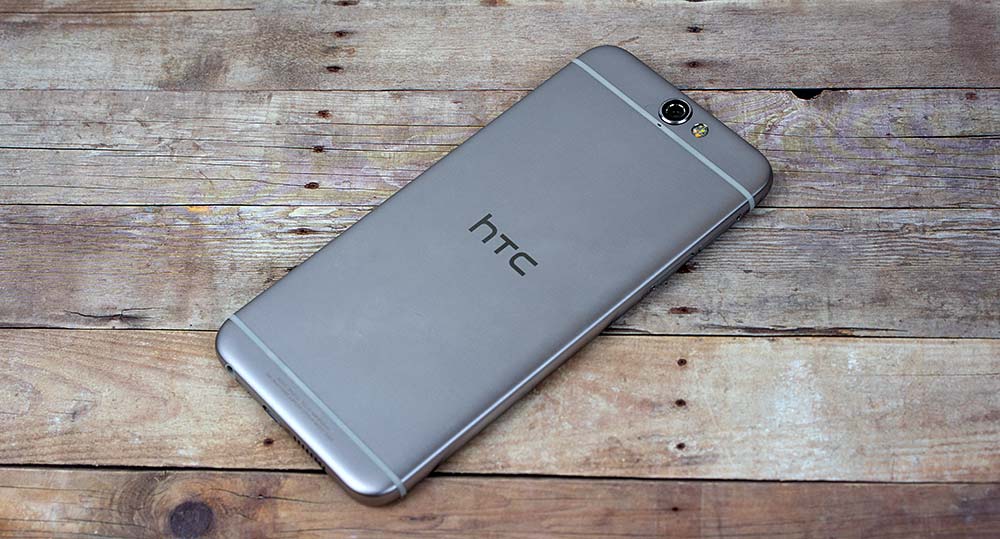
OK, let's talk about the fruity elephant in the room. The HTC One A9 looks a heck of a lot like the iPhone 6 and iPhone 6s. It's not just the plastic antenna lines that HTC said they came up with first (they did), it's the flat design, the side tapers, the beveled glass on the front and the size. Now that we've gotten that out of the way, and various considerations about the HTC design team's sudden lack of originality and whether you want your iPhone evangelist friends to think you've converted, let's talk about this Android smartphone's basic features. It has a 5" AMOLED full HD for vibrant colors, a midrange Snapdragon 617 CPU, a much improved camera (vs. the HTC One M8 and M9), a very good fingerprint scanner and a microSD card slot. It's the first non-Nexus phone to ship with Android 6.0 Marshmallow and it's available from a variety of carriers or unlocked direct from HTC. The unlocked model is one of the few that supports both GSM and CDMA networks, so it works on AT&T, T-Mobile and Verizon complete with 4G LTE. There's a separate Sprint model, no worries Sprint customers. The pre-order price was an attractive $399, but alas, that ends November 7, 2015 and the actual retail price is $499. Carriers may sell it at different prices, and in fact AT&T sells it for $520 and Sprint (goodness knows why) is currently listing it for $696.
Design and Ergonomics
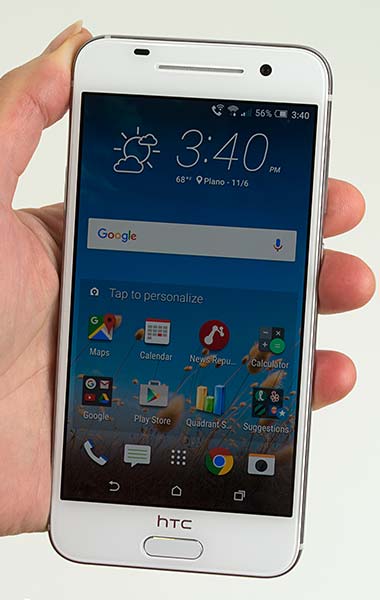
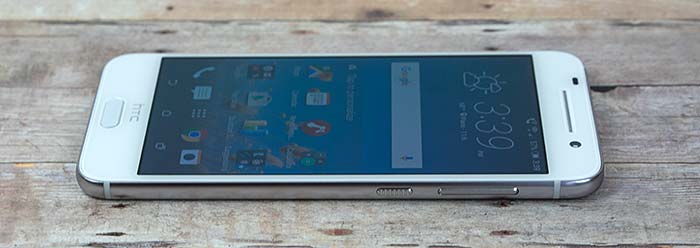
The HTC One A9 is extremely comfortable in hand, and we didn't have problems with accidental screen presses despite fairly narrow bezels. Following the iPhone's lead works here, since the iPhone puts strong emphasis on ergonomics and usability. I love handling the A9, and for those with small hands, it's a godsend. I have long fingers and large hands for a woman, which is often a recipe for disaster with a small phone (the combo causes all sorts of accidental presses), but I had no problems with the HTC. The phone is attractive, again (sorry, it's not our fault) in an iPhone sort of way. It's slim, svelte and the tapered glass looks lovely. The HTC One A9 is available in a variety of colors, and color availability depends on carrier and country. Ours is silver and is widely available. The phone's finish (at least our silver model) is extremely slippery--get a case.
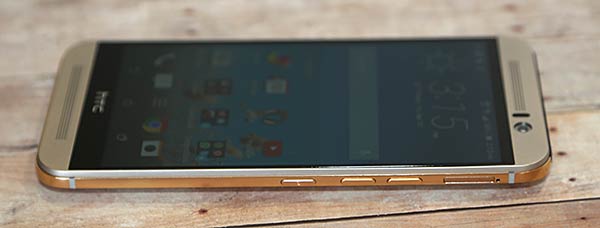
HTC has improved the power button, giving it a strongly ridged texture that's welcome, though not quite as necessary as on the HTC One M9 where the volume buttons were stacked right above the power button, making it harder to tell them apart by feel. The One A9 has a volume rocker, and that feels very different from the M9's separate buttons--add on that textured power button and you'll be operating this phone by feel instantly. The HTC's unibody aluminum casing is classy, and the plastic antenna window up top detracts only a bit from the overall look. It is curious that HTC needs that plastic up top when they have two plastic antenna lines that cross the body.
The phone has the usual micro USB port on the bottom and a 3.5mm audio jack for the 24-bit DAC audio amplifier within. HTC's focus on audio continues here, though the BoomSound stereo front-facing speakers are gone, replaced by a down-firing speaker on the bottom edge like the iPhone 6s and Samsung Galaxy S6. Audio from the speaker is average among smartphones rather than stellar like the One M9, though headphone audio sounds excellent.

Display
Samsung phone lovers will appreciate the AMOLED display that delivers more vibrant colors, richer blacks and higher contrast than HTC's usual SLCD displays. This is a midrange phone, so we're not getting the latest Samsung AMOLED panels that you'd find in the Samsung Galaxy S6 and Galaxy Note 5, but it's still very colorful and bright. HTC offers a few color tunings and a gloves mode for heightened sensitivity. The display's 1920 x 1080 full HD resolution mates well with the 5" panel, and QHD would be pointless overkill, not mention unlikely in what HTC views as the more affordable offering. The display is bright enough to be useable outdoors and is pleasingly sharp for extended reading.
Performance
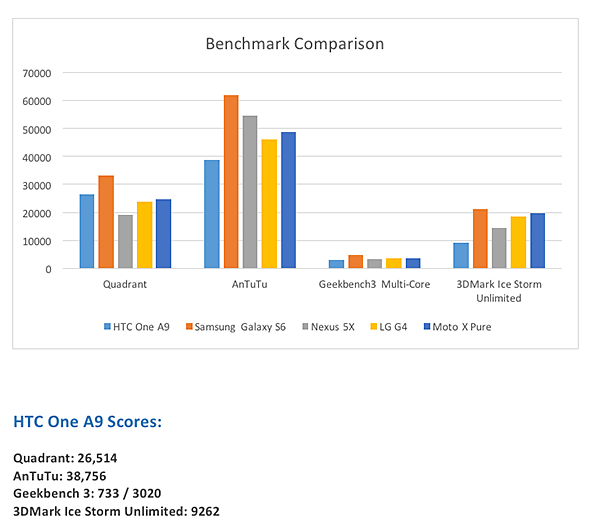
This may not run on Qualcomm's fastest mobile CPUs, but the HTC One A9 with the 1.5 GHz Snapdragon 617 feels very fluid and responsive. This is an octa-core CPU with 4 high power 1.5 GHz cores and 4 lower power 1.2 GHz cores (the phone switches between the high and low power set of cores, so only 4 cores are active at a time). The 3 gigs of RAM helps with multitasking, and the clean Android experience doesn't bog things down. If you're a serious 3D gamer always playing the latest intensive titles, then the A9 might not impress you as much; you'll notice occasional frame drops in games like Asphalt 8, though the game is still very playable and enjoyable. The US model has 32 gigs of storage plus a microSD card slot for storage expansion. That puts it ahead of the iPhone and Samsung Galaxy S6 that lack card slots, but on parity with the LG G4 and HTC's own One M9.
Benchmarks


Calling and Data
The unlocked model we have for review supports voice and fast 4G LTE data on AT&T, T-Mobile and Verizon (Verizon activation is coming in December according to HTC). Sprint users will have to buy the Sprint-specific model, either direct from HTC (much cheaper) or from Sprint. The unlocked model supports a wealth of bands and even handles T-Mobile WiFi calling and their new band 12. Data speeds are good and voice quality is very good. Voice sounds full and natural without digitization, and call volume is average.
Camera
Finally, a good, albeit not best of breed camera in an HTC phone. Their long foray into Ultrapixel rear cameras left us unenthused--sure they were good in low light thanks to enlarge pixel sites on the sensor, but the resolution and clarity fell far behind the competition. The HTC One A9 uses a 13MP Sony sensor that was tops in 2013 and 2014, and has now been surpassed, but it's still quite good and captures sharp photos with lively color and good light balance. Indeed, the days of HTC's severely blown out highlights are gone, and photos are decently exposed, even if not as well as the LG G4, Samsung Galaxy S6 and iPhone 6s. When using the two-tone flash in dark settings, we see some white-out of bright areas, but in outdoor sunny settings, highlights are decently controlled. The camera is on par with the LG G3, and that phone's camera still holds up well. The rear camera has optical image stabilization (OIS) to help with shaky hands, though we saw more bounce in videos than expected with OIS.
The front camera is an Ultrapixel model, and that's fine since we tend to shoot low light selfies often and don't need the very high resolution of a rear camera for up close and personal shots. Both the front and rear camera can shoot 1080p video, and the rear camera has time lapse and fast motion video too.
Battery Life
Here's a mystery: a phone with a midrange CPU and a smallish 1080p screen should have good battery life, even if that battery has 2150 mAh capacity vs. the big screen, hungry CPU flagships with their 3,000+ mAh batteries. Alas, the HTC One A9 has thoroughly average battery life. With light to moderate use it manages a day on a charge, but with moderate to heavy use you'll be looking for the charger or an external battery pack. We averaged 4 hours of screen on time (that's actual use time). Standby times are excellent thanks to Android Doze, a new feature in Marshmallow that cuts down on app power consumption during sleep. The phone supports Qualcomm Quick Charge 2.0, but as usual, HTC doesn't include a quick charger in the box, so you'll have to buy one separately for around $35.
Conclusion
The HTC One A9 is an easy phone to like at the pre-order price of $399, though we wouldn't call it a bargain. At the Nov. 7 release price of $499 (more at some carriers), it's hard to recommend as a wise buy when there are even better phones available at a similar price. The LG G4 is often discounted now, the Nexus 6P is a higher end piece at the same price and even the Samsung Galaxy S6 is seeing sales and discounts as Samsung tries to boost sales. If you particularly want a small screen unlocked phone, the choices are narrower, but the Moto X and Nexus 5X are both cheaper and fine phones. Granted the Moto X is no longer a small phone, but the Nexus 5X is suitable for smallish hands.
Pricing aside, HTC has made an attractive phone, though it's an almost embarrassing iPhone clone. It's fast and responsive, has expandable storage and the AMOLED display is colorful and sharp. It's one of the first phones with Android 6.0, though that appeal will fade as more phones get upgrades and new models are launched.
Price: $499 unlocked, carrier models pricing varies by carrier.
Website: www.htc.com
Droid 2 by Motorola

What's hot: Fast, good looking, top specs.
What's not: Camera's not terribly good, MotoBlur doesn't enhance experience.
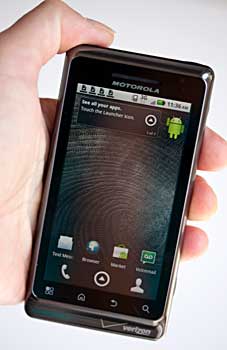
The original Motorola Droid represented Verizon and Motorola's first assault on the high end smartphone market. Thanks to what amounted to an excellent phone and an aggressive marketing campaign, the Droid enjoyed great success and the name "Droid" is on its way to becoming synonymous with Android smartphone. It's not easy being the Kleenex of Google phones, and the Droid 2 has a lot to live up to. Moto took a cautious route with the Droid 2 and it's a considered evolution of the first model. Though understandable, that don't mess with success philosophy is risky in today's hot smartphone market where new devices have to wow us with stunning designs or impressive new features to stand out. Can this reborn QWERTY slider keep up?
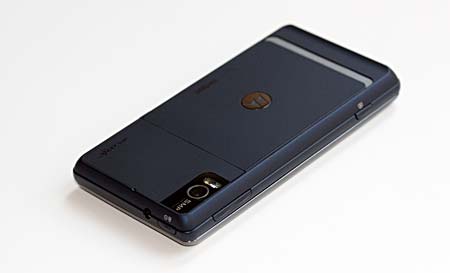
We think it can thanks to an attractive design, high class build and top specs, but the upcoming Galaxy S Epic 4G with its WiMAX 4G connection and Super AMOLED display may well put Sprint ahead soon in the Android QWERTY superphone wars. The Droid 2 will still win out on build quality, though we think the first gen Droid was actually a little more chic and daring than the Droid 2. The new Droid plays it safer and loses the stunning and startling rectilinear modern design. Instead we have a gunmetal chrome surround and rounded corners. The wonderful soft touch battery cover is still there, and it stays in place much better than the first gen Droid's.

The QWERTY keyboard is improved since Motorola ditched the pointless d-pad and extended the keyboard to the full length of the panel. The keys are domed which aids tactile feedback but travel is still woefully poor. It's not one of our favorite keyboards but it's certainly better than the original Droid's. And if you hate on-screen keyboards, it's certainly better than pecking at the 3.7" display's on-screen keyboard.
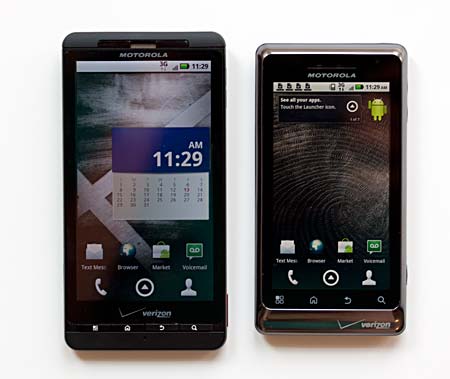
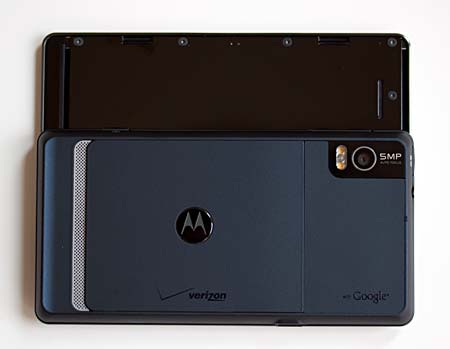
The Droid 2 is the same size and overall shape as the first gen Droid. We still have a sharp 3.7" capacitive multi-touch display with pinch zooming, a 5 megapixel shooter and dual LED flash on the back and a large, stylish speakerphone grille on the back. The Droid 2's speakerphone doesn't sound as impossibly full and rich as the first gen Droid, but it gets the job done for conference calls and in-car navigation as long as you don't set the volume to max (it distorts at max volume).
The Droid 2 and Droid.
The Droid 2 ships with Android OS 2.2 Froyo, currently the latest and greatest version of every robot's favorite OS. Some of Froyo's improvements are hidden by Motorola's MotoBlur software. Thankfully, this isn't the over-the-top MotoBlur software used on the mid-range Backflip and Cliq XT, and you're not barraged with screen-hogging social networking widgets, account creation and the like. Instead Moto has smaller, low key social networking widgets that are just so-so, enhanced contacts to store all the social network data and added desktop panels with a bottom quick nav. The Droid 2 works with Exchange, POP3/IMAP and Gmail accounts, Yahoo Mail, Skype Mobile, Photobucket, Twitter, MySpace, Facebook, Picasa and of course Google sync, and you can set these up via the Accounts section in settings.

The original Droid was a super-fast phone for only a few months. Then the first crop of 1GHz Qualcomm Snapdragon-powered phones hit the market, followed by other ARM 1GHz CPUs and Samsung's own Hummingbird 1 GHz powerhouse. The Droid 2 is ready for the fight now with a 1GHz TI OMAP CPU that put it at the top of our benchmarks. Froyo 2.2 is a faster OS, and that helped the Nexus One
 to the top of the heap previously (it was the only 2.2 OS phone for a month or two), but the Droid 2 comes out just a little bit ahead. It's also faster than the Samsung Galaxy S family phones (Captivate and Vibrant) in all but graphics, but once those two get the 2.2 update, they may come out on top.


Benchmarks:
Softweg Benchmark scores (2D tests only for graphics:
Samsung Captivate

Total graphics score: 31.65
Total CPU score: 772.98
Total memory score: 645.07
Total file system score: 101.22
Motorola Droid X

Total graphics score: 21.08
Total CPU score: 612.14
Total memory score: 138.11
Total file system score: 124.22
Motorola Droid 2

Graphics (2D): 31.36
CPU: 1728.84
Memory: 420.51
File system: 160.21
Quadrant Benchmark (3D graphics tests too): 1376.
The Droid 2 has an ample 512 megs of RAM (double that of the original Droid) and 8 gigs of internal storage. Verizon includes an 8 gig microSD card as well, and it lives under the battery door.
Phone and Data
Motorola phones generally have excellent reception, and our Droid 2 is no exception. In our reception-challenged area, it had a stronger signal as measured in db than most other Verizon phones except the comparable Droid X and original Droid. Data speeds are good and we had no problem with dropped calls. Call quality sounds a little robotic, if you'll forgive the pun. Voice isn't completely natural on either end, likely thanks to an overly-agressive DSP, but it does make for generally clear calls with acceptable volume. We did occasionally hear our voice echo back, but it wasn't ubiquitous or overbearing. As you'd expect, the Moto works with stereo and mono Bluetooth headsets as well as wired headsets with a 3.5mm jack. Audio quality through a good set of wired headphones is pleasing.

Camera and GPS
First the good news: the GPS works well with both Google Maps and VZ Navigator. You can download VZ Navigator under the Verizon tab in the Android Market-- Verizon shows a great deal of restraint with bundled apps and doesn't load them all on the phone at the factory. The GPS gets a fix quickly and holds it, even at brisk highway speeds. The speaker is reasonably loud and fairly clear unless you crank the volume near max where it distorts. Google Maps, Google latitude and Google Places are free location-based apps and services, and Google Maps provides spoken turn-by-turn directions. VZ Navigator's display is oriented toward safe driving with a large on-screen "take this turn next" approach, and it has voice guidance. Navigator costs $10/month and you can add and remove the service from your account at any time.
The camera isn't wonderful. The first Droid's camera was pitiful, so the Droid 2's camera at least looks good in comparison. Photos are usable and are certainly above most 3 megapixel fixed focus camera phone shots, but we still want more sharpness and less haze. The dual LED flash is blinding and does help in low light situations. The camera can shoot video at DVD resolution 720 x 480, and camera video tends to look a bit hazy too.

Conclusion
It's easy to recommend the Motorola Droid 2; it's a top notch superphone that fits easier in the pocket than the current crop of 4.3" screen Android phones. Better yet, it has a QWERTY hardware keyboard, a feature that's rare on the high end of the Android phone parade. If you hate on-screen texting, the Droid 2 wants to be your messaging buddy. We don't see first gen Droid owners running to upgrade: though the Droid 2 adds a faster CPU, a somewhat better keyboard and the WiFi Hotspot Internet sharing feature (requires an additional monthly data fee), it's not that much different from the first Droid. But for those who are getting their first Android phone, it's a mighty tempting piece. Motorola's in a lucky position when one of the Droid 2's biggest competitors on Verizon is the Motorola Droid X. Which of those two you get depends on your design preference: large slate vs. QWERTY slider. For you shutterbugs, the Droid X does have a better camera too.

Price: $199 with 2 year contract

Samsung Galaxy Note Edge

What's Hot: Attractive and eye-catching curved display with secondary screen function that's actually very useful. As with the Note 4, it's fast, has a gorgeous display and plenty of screen real estate. Removable battery and microSD card slot, sharp camera.
What's Not: Expensive.
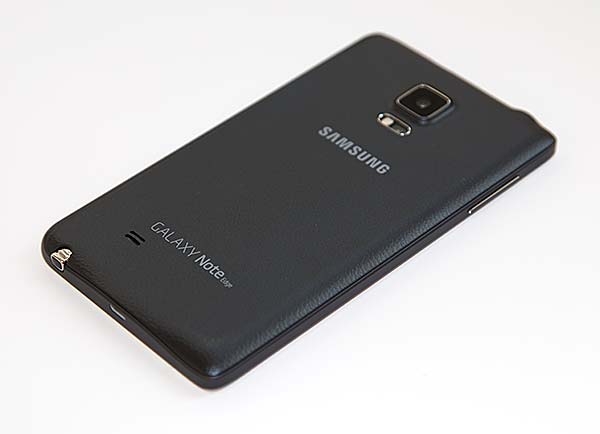
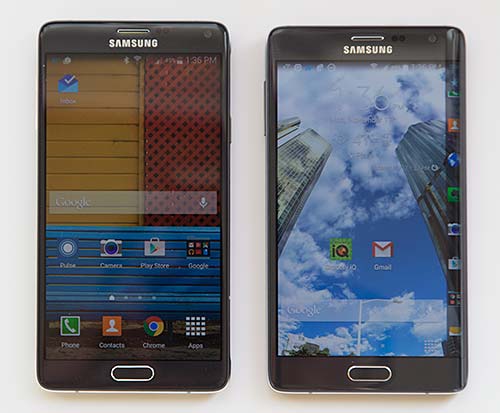
I'd say I'm playing devil's advocate, but that wouldn't be accurate. I'm not simply posturing or positing to create an alternative view from the naysayers who think the Samsung Galaxy Note Edge isn't worth the money. I think it is. There, I've said it. The curved display makes the Note Edge look much more attractive and eye catching than the Note 4. Looks are nice but utility is important for that Swiss army knife, the smartphone. The Note Edge's 160 pixel wide side display is indeed quite useful and it's the better vehicle to realize ideas Samsung had long ago, like the multi-tasking sidebar. Yes, it costs on average $100 more than the Galaxy Note 4, a phablet that the Note Edge completely mirrors in specs and features, including the S Pen. Clearly, the Galaxy Note 4 is already a very expensive phone, as is the iPhone 6 Plus--the Galaxy Note Edge is the same price as the 64 gig iPhone 6 Plus that's a simpler piece of technology. When the Note 4 costs $700 to $850, depending on carrier, what's another $100 for the Galaxy Note Edge? That's around 13.5% more full retail or $5 per month if you're financing it via a carrier payment plan. I'm guessing that many folks who are buying the pricey Note 4 have money to spend and are technology enthusiasts, and when you're spending $750, the jump to $850 might be acceptable. That said, for those who are tight on funds and are buying these phones on contract, then the Edge might not be worth it to you, since it averages a whopping $399 on contract, which is $100 more than the Note 4 and $200 more than average flagship smartphones like the Samsung Galaxy S5 and 16 gig iPhone 6(except T-Mobile, they don't offer contracts anymore). The Samsung Galaxy Note Edge will be available on the big 4 US carriers.
The Tale of Two Notes
Samsung showed the world its two newest phablets, the Galaxy Note 4 and the Galaxy Note Edge, in early September of this year at the IFA tech tradeshow in Berlin and at an event in New York City. At the time, they didn't state pricing, though it was self-evident that the rounded display on the Note Edge would cost more. They didn't say when it would be available either, and it wasn't until mid-October that we found out Samsung had decided the Note Edge was a limited edition sort of model, with 1 million expected to ship in 2014 (and not all countries are getting it). I wouldn't be surprised if they widened their goals in 2015 if demand for the Note Edge is strong. Phone enthusiasts who tuned in to our and other sites' coverage of Samsung's announcement seemed to lean toward the Note Edge, since it was a more novel and clear update from the otherwise slowly evolving Note line. But the Samsung Galaxy Note 4, arguably Samsung's best phone yet, had a month lead on the Note Edge and with availability up in the air until recently, lots of folks grabbed a Note 4. This review is for those of you who haven't purchased a Note 4 yet, or are within your return period.
What's the Same?
Just about everything is the same as the Note 4, other than the curved glass display. The Samsung Galaxy Note Edge runs on the same 2.7GHz quad core Qualcomm Snapdragon 805 CPU with Adreno 420 graphics, 3 gigs of RAM and 32 gigs of storage. It has a strikingly good QHD Super AMOLED display running at 2560 x 1440 + 160, but the display is 5.6" rather than 5.7" (the main or flat portion of the display). It has a removable 3,000 mAh battery, microSD card slot, dual band WiFi 802.11ac, Bluetooth 4.0, NFC and a GPS with GLONASS. The phone runs Android 4.4.4 KitKat with Samsung's TouchWiz UI and apps added. The Edge 4 uses the same S Pen (Wacom) with 2,048 levels of pressure sensitivity and it has the same note taking apps.
What's Different?
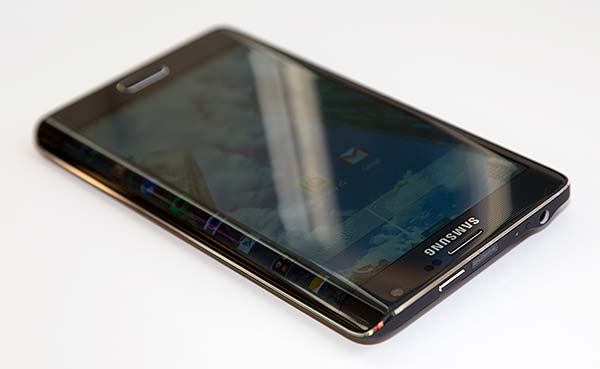
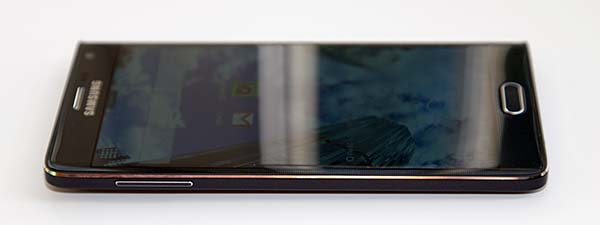
The Samsung Galaxy Note Edge has a one tenth of an inch smaller main display, a 200 mAh smaller battery (it's a shorter version of the Note 4 battery) and it's ever so slightly shorter and slightly wider than the Note 4. The power button is up top since it can't sit on the right side (there's glass there!). It has the same removable faux leather back (actually thin plastic) and metal sides, though the sides and back cover are necessarily designed a bit differently to fit the Edge's shape. For those who are interested in Samsung's Gear VR glasses, sorry it won't fit (those glasses are designed to house a Note 4).
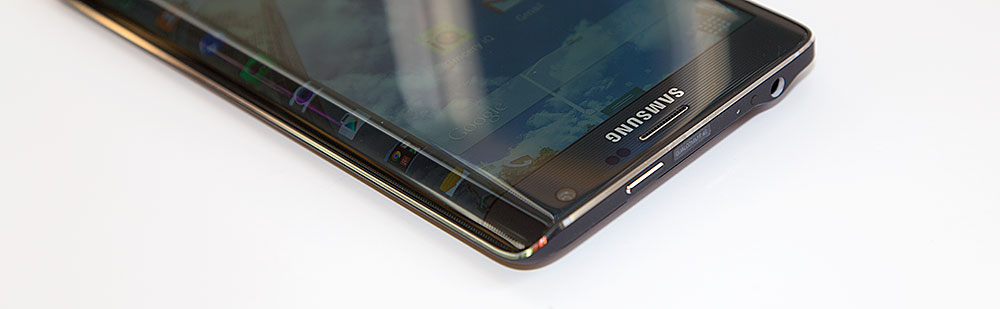
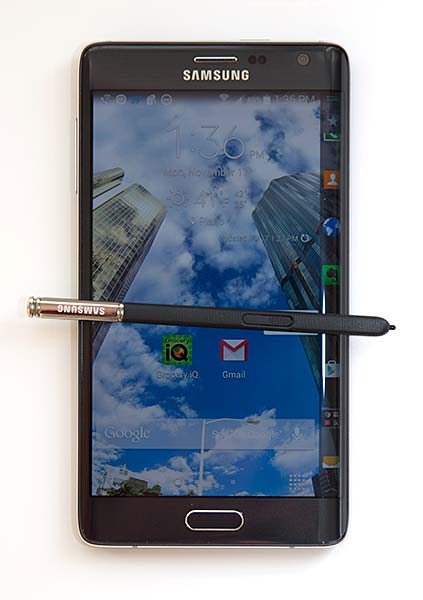
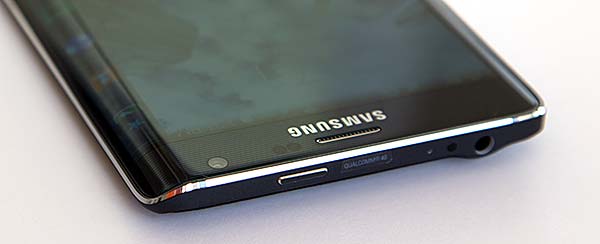
The star of the show here is the curved Super AMOLED display that gracefully seems to flow like a waterfall down the right side. The curve is very pronounced and it is indeed a single piece of Gorilla Glass 3 with a curved AMOLED display underneath. In order to create a bit of symmetry, the left side has just a little hint of a curve. Samsung says it's a very tech-intensive process to make the Note Edge, and I'd wager their profit margins are slimmer on the Edge because of this. It's simply lovely to look at and it bends the mind in a good way. The first time I saw it at Samsung's launch event I was taken with the stunning look, excellent viewing angles for both the edge display and main display and the useful widgets that ran on the edge display. You can have up to 7 widgets running on the edge display, and several are pre-installed. There's an app launcher that can hold up to 10 apps (you can select the apps), a second launcher screen that's not customizable on our T-Mobile version, speed dial, news, sports and stock tickers from Yahoo, weather, Twitter (sadly it's trending hashtags and not your own feed) and you can download more widgets. We downloaded the calendar widget and two games (all made by Samsung) and Samsung offers a developer SDK so third party developers can create more.
We're impressed at Samsung's execution: it's all well thought out and polished. Here are a few examples:
- The side display has palm detection so you don't accidentally activate something on the edge display. If you're tapping the main display it rightly ignores a simultaneous tap on the edge display.
- The phone's metal frame sticks out just enough so that it will contact the ground first if you drop the Note Edge and it lands on the curved glass side or its face. Still, I'd avoid dropping this expensive piece of tech!
- Wait, you're left handed like me? Though I actually find the phone usable in normal mode, it is more comfortable when held in the left hand, as a righty would. There's a 180 degree option you can enable so you can use the phone upside down, with the curve on the left. It's not as bad as you might think: I actually prefer the pen at the top and the power button at the bottom. What about the home, back and multi-tasking keys being up top? Samsung adds a small set of on-screen buttons at the bottom accessible via a little grab handle with virtual buttons. When 180 degree mode is enabled, it activates accelerometer-based rotation, so you can use it in normal and upside down modes simply by rotating the phone.
Color me impressed: I expected all sorts of quirks and usability issues, but Samsung has it all under control. The main screen doesn't accidentally bleed onto the side, nor does the side bar ever intrude on the main screen, though refraction through the apex of the curve might make it look like a window is extending beyond the divide. Since it's all one display rather than two discrete units, it's all handled via firmware and software. Several of the built-in apps make use of the side screen, for example the video player controls are on the edge display so they don't cover your movie. S Note's buttons are on the edge as are the camera's. You get a more uncluttered view in these apps, and thanks to the shortcuts launcher widget, you don't need a gaggle of icons on your home screen. It also makes multi-tasking easier and quicker. You know that sidebar Samsung's used with previous Note models that you bring up by pressing and holding the back button or by leaving a little drawer handle exposed? Everyone seems to like the multi-tasking idea but many folks complained about the little drawer handle blocking app windows. This is the perfect solution: a side display that doesn't interfere with the main attraction. Third party applications can add support for the edge display if they wish, and we'd love to see Evernote, the webkit web browser and even games do so.
But wait, there's more: swipe down on the edge screen and you'll be greeted with 5 handy utilities: a ruler, stopwatch, timer, flashlight control and the voice recorder. Swipe back and forth along the length of the edge display when the phone is sleeping, and just the edge display will come alive for interaction. There's a scheduled bedside clock mode (you can have it active for up to 12 hours per day) that shows you the time and temperature. When a call comes in, the notification and action buttons appear on the edge display rather than blocking whatever you were doing on screen. It's all very cool and generally speaking it makes the phone more expedient and ple
asant to use.


Benchmarks

 Quadrant3DMark Ice StormAnTuTuSunspider JavaScript Test (lower is better)
Samsung Galaxy Note Edge24,53219,84146,271353
Samsung Galaxy Note 424,32719,66746,912425
Samsung Galaxy Note 534,63124,46363,086351 (Webkit)/688 (Chrome)
Samsung Galaxy S6 edge+34,42224,39764,059349 (Webkit)/692 (Chrome)
Nexus 613,595(??)23,52049,961795
Motorola Droid Turbo22,70920,73548,332795
Samsung Galaxy S523,64318,32935,357398
Moto X (2nd gen)22,17019,92444,340776
Moto X (first gen)83576800 (extreme)21,3771097
LG G324,38518,70836,525425
HTC One M824,52720,896 (unlimited)36,087776
Sony Xperia Z32158916,135 (unlimited)35,008837
Nexus 5880817,828 (unlimited)27,017718
Moto G84852778 (extreme)17,3961311
LG G219,7629803 (extreme)32,990823
Samsung Galaxy S412,27611,601 (unlimited)24,776826
Geekbench 3: 1097/3214


The Rest
If you haven't read our Samsung Galaxy Note 4 review, please do. It covers everything else, from the S Pen to the excellent camera with 4K video recording to the new and fast Snapdragon 805 quad core CPU. The Galaxy Note Edge's main display is just as sharp, color saturated and bright as the Note 4, and you have similar options for color handling. It uses the same fingerprint scanner as the Galaxy Note 4, and has the same embedded heart rate monitor, blood oxygen level monitor and UV reader as the Note 4 too.
Battery Life
Samsung claims battery life should be similar to the Samsung Galaxy Note 4, though we're looking at 200 mAh less capacity. The Note 4 is an all-day phone, but not a two day phone. The Galaxy Note Edge is an all-day phone too, but it lasts about 30 minutes less than the Note 4 (for actual screen on time). Like the Note 4, the Note Edge comes with a Samsung quick charger in the box and the phone with Snapdragon CPU supports Qualcomm Quick Charge 2.0 so you can top up 30 to 50% of the battery in a half hour. Happily the Galaxy Note Edge has a removable battery should you need to swap in a spare (no, the slightly bigger Note 4 battery won't fit).
Conclusion
Samsung's doing an admirable job of fighting the copycat label they earned in the Apple v. Samsung court battles a few years back. This is an original and daring phone, and we're glad they took the chance. Yes, it's expensive, especially when paired with the beyond flagship specs and size of the Note 4, but the side display and companion software features make this a more enjoyable and usable phone. And it looks darned good too. Conversation starter? Sure, but it has a purpose and polish that make the Samsung Galaxy Note Edge a much more promising and practical phone than the Samsung Galaxy Note Round, had the Round ever made it to production. Unlike the Galaxy Round, the Samsung Galaxy Note Edge isn't using curved glass just for the sake of using curved glass.
Price: $399 with 2 year contract, $840 to $946 full retail, varies by carrier
Website: www.samsung.com


OnePlus X

What's Hot: Fantastic looks and materials for the price. Pleasing full HD AMOLED display. Low price.
What's Not: Unabashed iPhone 5 clone, lean selection of 4G LTE bands, single band WiFi and no NFC.
OnePlus disrupted the market with their first Android smartphone, the OnePlus One. It was a big phone with very good specs for a few hundred dollars less than the big name competition at release in April 2014. If that sounds too good to be true, it was. It was insanely difficult to buy the OnePlus One if you lived in the US, Canada or the EU thanks to the company's irritating invite system. We assumed the invite system would go away after a month or two when the company got a handle on production, but it persisted and seems more like a marketing tool for OnePlus to make the phones seem difficult to obtain and thus desirable. The illusive invite, along with some dubious competitions requiring participants to destroy perfectly good smartphones on film (among others), stood in the way of both goodwill with customers and getting the phone out in volume.
Fast forward 1.5 years later and OnePlus now has the OnePlus 2 and the One Plus X, both of which launched under the same invite system (argh!). These are the current models with the 2 being the higher end model and the X being the new really affordable model. Happily, in early December, OnePlus made the OnePlus 2 available without an invite, but unfortunately the X still requires one.
Now that we've gotten the invite system out of the way, let's look at the phone itself. The OnePlus X faces great challenges. When the One came out in early 2014, you either bought a low end phone with mediocre looks and low end specs or you bought a $600+ flagship. Thus the OnePlus One was an exciting phone since it brought flagship specs under $400. 2015 was the year of the affordable near-flagship, with more phones of note coming out in the $225-$450 range than hot new expensive flagships. OnePlus' territory was overrun, and the X is their attempt to attack the even lower price market. It's hard to make a $250 full retail unlocked phone that doesn't look and act like a bundle of compromises. OnePlus managed to make a phone that looks and feels expensive though, and performance is pretty good too.
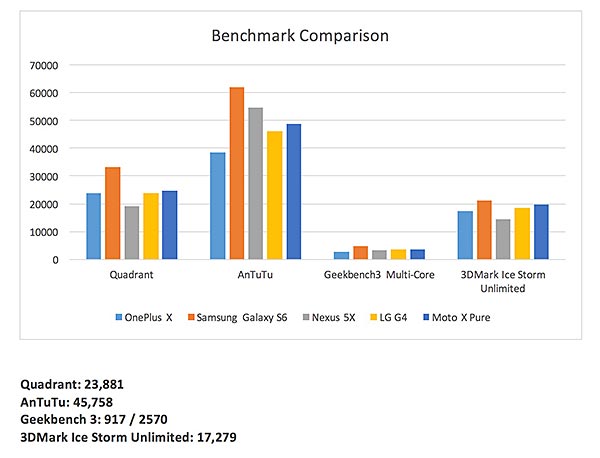
The OnePlus X is basically the 2014 OnePlus One in a new casing with a smaller 5" screen. It has the quad core 2.3 GHz Snapdragon 801 CPU with Adreno 330 graphics of the One, which was top dog in early to mid-2014. It has 3 gigs of RAM and 16 gigs of storage. For $250, we're pleased with the 3 gigs of RAM and 8 or 16 gigs of storage is standard in lower priced phones. The CPU is old, but it's still a solid performer that's adequate to meet many users' demands. The phone runs OxygenOS built on Android 5.1.1 Lollipop. Android 6.0 Marshmallow is out, and we wish that OnePlus would give up on their custom Android builds (they used CyanogenMod on the OnePlus One, but the companies parted ways abruptly). It's not that we don't like OxygenOS- on the contrary, it's tasteful, offers a few nice customizations and has a somewhat stock Android feel. Rather the problem is that their in-house engineers are slow with OS releases and it's a shame that the phone was released with Lollipop with no quick update in sight.

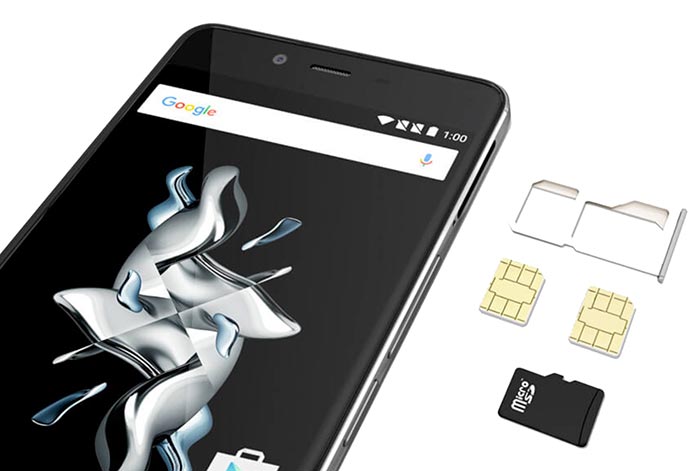
The mainland China model ships with HydrogenOS (also based on Android 5.1.1), which looks and feels a little odd if you're accustomed to US Android builds. That said, the China model is readily available from exporters like GearBest.com who supplied our review unit, since there's no invite system involved. If you're kinda geeky (the core market for OnePlus phones is enthusiasts), then it's not hard to flash it with OxygenOS. Download the ROM image, put it in internal storage and boot up the phone into recovery to flash it. The US OnePlus X sold on OnePlus' website has a surprisingly limited collection of US 4G LTE bands, and the Chinese model includes pretty much none that are useful for the US, so you'll be stuck with HSPA+ 3G if you do buy the Chinese model. The US version covers the basic 4G LTE bands used by T-Mobile and AT&T, but leaves out some newer bands that those carriers have rolled out for better coverage (band 12 on T-Mobile and band 17 on AT&T, for example). That sets the OnePlus X behind the also affordable but not as pretty 3rd gen Moto G. Is it possible to flash the cell radio too and switch to US bands as it was with the import OnePlus One? Maybe, we don't have any radio ROMs to experiment with for the X. Call quality is quite good, even with the Chinese model on US carriers. The phone uses a single carrier to hold your choice of 2 nano SIM cards or 1 SIM card and a microSD card.
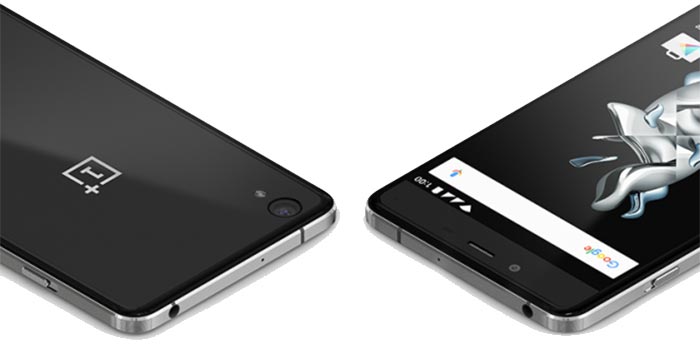
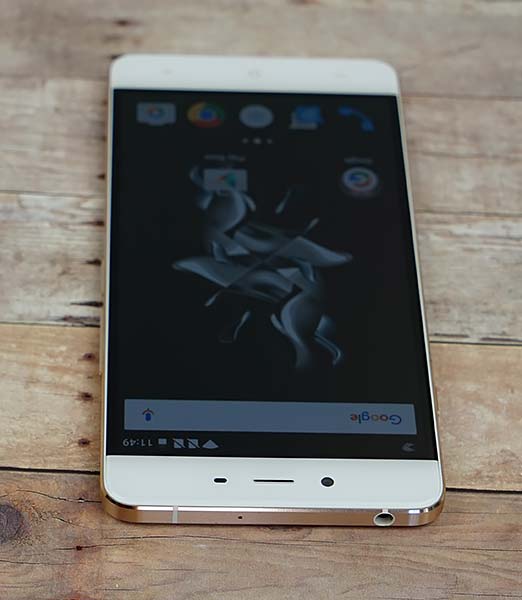
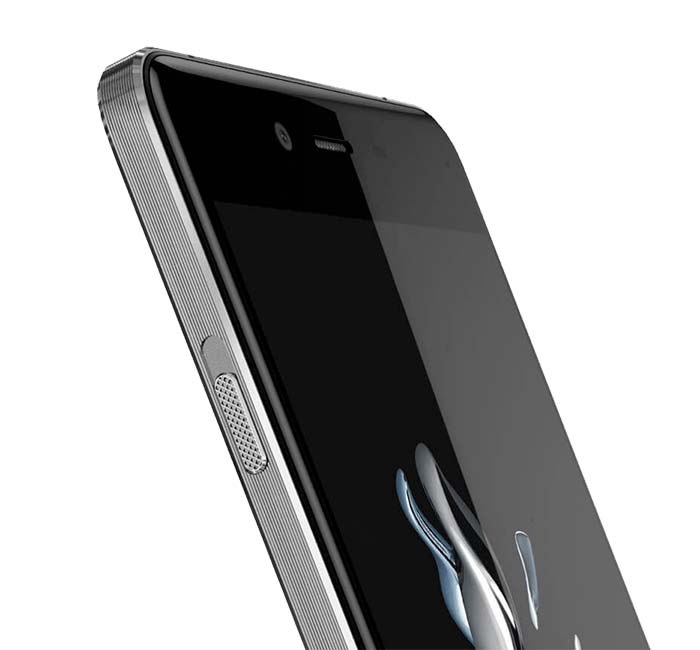
In terms of looks, the OnePlus X is unparalleled in this price range. It's clad in glass front and back (Gorilla Glass 3 on the front) and it has metal sides. The US version is available in black with silver sides (called Onyx) and there's a more expensive limited edition with a ceramic back. In China it's available with white glass and gold sides (called Champagne). The phone is an unabashed iPhone 5 clone, right down to the silence slider on the left side that's standard for iPhones but never on Android phones. Copy or no, it's great looking, and casing build quality is excellent with no gaps, creaks or squeaks. The bad news is that it's very slippery, but a silicone case is included that improves grip without making the
phone bulky or ugly.
The phone has a standard micro USB 2.0 port, and the 2525 mAh battery is sealed inside. This isn't a Qualcomm Quick Charge phone, nor does it support wireless charging, but that's fair given the low price. Battery life is good and the phone lasted us from 8am to 10pm on a charge (4.5 hours of screen on time). The small 5" AMOLED display is power frugal, and at 1920 x 1080, it looks sharp and has AMOLED's signature vibrant colors and deep blacks. The display is cool (whites tend toward the blue) and there's no software adjustment on the OxygenOS models. Interestingly the Chinese HydrogenOS models do have color temperature settings.
Though the Snapdragon 801 chipset supports dual band WiFi, the OnePlus X has single band WiFi 802.11n, either to reduce licensing costs or to give you a reason to spend $70 more on the higher end OnePlus 2 (which I'd recommend if you must have a OnePlus and can afford it). The phone has Bluetooth 4.0 and the usual GPS with GLONASS but no NFC. It has a microSD card slot to expand storage for videos, photos and other files.
The front 8MP camera provides fairly sharp video chat footage and decent selfies, while the rear 13MP camera is just OK. Again, this is a $250 phone, so we can't expect a Galaxy S6 or LG G4 level camera here. Images have a slightly magenta-green bias and high contrast stymies it, so you'll see white-out in bright outdoor shots. Indoor shots are reasonably good with the flash, and recorded 1080p video seems to suffer from frame drops if the camera or subject moves.

Conclusion
The OnePlus X faces competition not only from the OnePlus 2 (just $70 more) but the very likeable and good Moto G 3rd edition. There are of course other budget choices like the Alcatel OneTouch Idol 3 (not quite as pretty but more LTE bands and a bigger screen), last year's Samsung Galaxy S5 on discount and some lower end Lumia phones if you're open to Windows Phone. The OnePlus X is by far the most attractive and classy looking of the lot, and it's one of the few that's 5" for those with smaller hands and pockets. Call quality is good, OxygenOS is pleasing, though we wish the phone ran with a new Android base and the phone has expandable storage. For $250, as long as you don't need more LTE bands in your coverage area, it's an impressive phone. We wish we could be as enthused about the company's marketing and inventory mangement practices as we are by the phone.
Website: www.oneplus.net
Price: $250, our unit came from GearBest.com

Samsung Galaxy Tab S2 9.7

What's Hot: Crazy thin and light, amazing Super AMOLED display, 4:3 aspect ratio great for web and reading.
What's Not: 4:3 aspect ratio not ideal if your primary use is video playback. Android tablet app selection still slim.
So you like the Samsung Galaxy Tab S but you figure it's last year's model and you have a hankering for a 4:3 aspect ratio that's easier to read on? Then you're in luck: the Samsung Galaxy Tab S2 models are the refresh with a faster CPU and lighter TouchWiz skin, and 4:3 aspect ratio displays. Yep, just like the iPad. That aspect ratio makes the tablet easier to hold and it is indeed better for reading documents, web pages and books. In fact, I find games more enjoyable too. However, if you're buying a tablet primarily for watching movies, TV shows and YouTube, then you might want to opt for last year's Tab S or consider the Dell Venue 10 7000. Those two will also net you the incredibly vibrant AMOLED display but with the standard Android tablet 16:10 aspect ratio that means almost no black bars on the top and bottom of widescreen content.
The Samsung Galaxy Tab S2 is available in two sizes: 9.7" and 8". We look at the 9.7" model in this review. They're available in your choice of black, white or gold and each has a matte back so we're not talking blingy gold or slippery stuff. The tablets are some of the thinnest and lightest on the market (currently they're the thinnest at 5.9mm). The 9.7" model weighs just 13.7 ounces (almost 2 ounces less than the iPad Air 2) and the 8" model weighs 9.34 ounces. They feel trivially thin and light--as if they were props rather than actual devices. That's a good thing-- despite the light weight, they don't feel or look cheap. Samsung hasn't moved to exotic materials here as they did with the Samsung Galaxy S6 family and the Note 5, but the plastic back with metal frame look and feel quite nice.
The tablet runs Android 5.1.1 Lollipop with Samsung's ever improving TouchWiz. TouchWiz is lighter and less overwrought and it still brings great features like multi-window multitasking. Flipboard is still here as the leftmost home screen, for better or worse, and there are a few Samsung staples like their own app store and Milk Music.
Horsepower and Performance
Inside, Samsung has moved up to the (Exynos Octa 7 CPU family) Exynos 5433 CPU that has four high power 1.9 GHz cores and four 1.33 GHz low power cores. It uses the fairly powerful MALI-T760 graphics that provides very good performance not only in benchmarks but in today's popular 3D games. This is the same CPU used in the International version of the Samsung Galaxy Note 4, and while I'm sure everyone would be even more excited if Samsung used their latest high end Exynos CPU from the Galaxy S6 and Note 5, the performance is still good enough to make it one of the fastest Android tablets on the market (and almost as fast as the iPad Air 2 in benchmarks). The tablet has 3 gigs of RAM, as did the first generation Tab S and 32 or 64 gigs of storage. Our 32 gig model had 25.4 gigs available on first boot. There's a microSD card slot to expand storage with cards up to 128 gigs. The Tab S2 also supports USB host, which means if you get a USB OTG dongle adapter, you can use USB flash drives, card readers and small self-powered portable hard drives with the tablet.
Above: the optional keyboard case.

Benchmarks
 QuadrantAnTuTu3D Mark Ice Storm UnlimitedGeekbench 3
Samsung Galaxy Tab S2 9.728,12853,16517,6201254/4308
Samsung Galaxy Tab S 8.421,51332,92713,475935/ 2739
Samsung Galaxy Tab S 10.5 (LTE)22.27837,78616,434937/2739
Samsung Galaxy Tab Pro 8.423,35534,89013,785908/2807
Dell Venue 8 748021,31443,92618,343787/2456
Nexus 913,72856,93726,3071950/3318
iPad Air 2N/A63,15221,6811819/4452
NVIDIA Shield Tablet21,41451,83830,36451119/3407
Samsung Galaxy Note 8.0705416,2143299N/A
Samsung Galaxy Tab Pro 10.114,51533,94713,458946/2773
Samsung Galaxy Tab 4 10.1918117,2394615N/A

Super AMOLED Display is Super
The display is simply amazing. Few tablets have AMOLED displays, with the first gen Tab S and the Dell Venue 8 and 10 7000 models rounding up current offerings. The display far exceeds the sRGB color gamut and even covers more than 100% of the wider Adobe RGB gamut. That means you'll get incredibly saturated and vibrant colors with near infinite contrast as you do with the Samsung Galaxy S5, S6 and recent Galaxy Note phones. As with those phones, you can choose from several different color profiles including AMOLED Photo for a more realistic 100% sRGB gamut (handy if you're using it to proof photos or video). The display is also extremely bright and remains visible outdoors. Auto-brightness works well and unlike some older Samsung mobile products, indoor brightness doesn't default to a too dim setting. This is a touch screen and it doesn't have the active Wacom digitizer that Samsung Galaxy Note phones and tablets have. You can use a capacitive stylus but nothing that's precise and there's no palm rejection since capacitive styli are essentially finger replacements (they're capacitive as are your fingers).
Battery Life
The Galaxy Tab S2 actually has a lower capacity battery than the Tab S. CPU efficiencies and the lower resolution afforded by the smaller 4:3 aspect ratio display mean lower power consumption. But the 5870 mAh battery in our 9.7" model (4,000 mAh in the 8" model) seems a bit too modest. With auto-brightness on and WiFi turned on, our 9.7" tablet typically lasted two days on a charge with light to moderate use. That clocked in at 4.5 to 5 hours of screen on time (actual active usage time), which is lower than the original Tab S and several competing tablets like the Dell Venue 10 7000 and the iPad Air. Our tests include web browsing, email, reading an eBook in Kindle, streaming an hour episode via Netflix, editing a few photos and watching 5 short YouTube videos. If you use the GPS or play 3D games, battery life will be shorter.

Connectivity
We look at the WiFi-only models here, and they have dual band WiFi 802.11ac, Bluetooth 4.1 BLE and a GPS with GLONASS but no NFC. Carriers will sell versions with 4G LTE added, typically for $150 additional at full retail.
Battery Life
The Galaxy Tab S2 actually has a lower capacity battery than the Tab S. CPU efficiencies and the lower resolution afforded by the smaller 4:3 aspect ratio display mean lower power consumption. But the 5870 mAh battery in our 9.7" model (4,000 mAh in the 8" model) seems a bit too modest. With auto-brightness on and WiFi turned on, our 9.7" tablet typically lasted two days on a charge with light to moderate use. That clocked in at 4.5 to 5 hours of screen on time (actual active usage time), which is lower than the original Tab S and several competing tablets like the Dell Venue 10 7000 and the iPad Air. Our tests include web browsing, email, reading an eBook in Kindle, streaming an hour episode via Netflix, editing a few photos and watching 5 short YouTube videos. If you use the GPS or play 3D games, battery life will be shorter.
Samsung Galaxy Tab S2
Connectivity
We look at the WiFi-only models here, and they have dual band WiFi 802.11ac, Bluetooth 4.1 BLE and a GPS with GLONASS but no NFC. Carriers will sell versions with 4G LTE added, typically for $150 additional at full retail.
Samsung Galaxy Tab S2
Conclusion
The Samsung Galaxy Tab S2, as Samsung intended, is the Android answer to the iPad Air, right down to the 4:3 aspect ratio and thin and light design. Though the back is plastic, the tablet has a quality feel and look, and it indeed is one of the nicest Android tablets money can buy. It may not add groundbreaking new features, but it brings some of the best features and parts Samsung has to offer in 2015. We like the improved TouchWiz experience that lightens the load and the bloat while providing very useful capabilities like multi-window multitasking. The S2 runs as smoothly as the Nexus 9 running straight Android 5.1, and in fact it feels faster. The tablet's only problem with respect to the iPad isn't Samsung's fault: there are still relatively few tablet optimized apps in Android land, and that means some of your favorites (Instagram, Facebook) stretch the small screen experience to fill the display rather than make good use of the added real estate. If your interests extend only to the built-in apps like PIMs, the web browser, video player and MS Office, then you'll do fine. Netflix supports tablets nicely and there are a few tablet-optimized games that are truly pleasant on the Galaxy Tab S2.
Price: $499 for 32 gig WiFi-only model. ~ $650 for 4G LTE model sold direct by carriers
Website: www.samsung.com

Footer Ads

 
Back To Top
Copyright © 2014 Clean Cracked Softwares ! Download Clean Cracks and License for your preferred programs. Designed by Brief Reviews